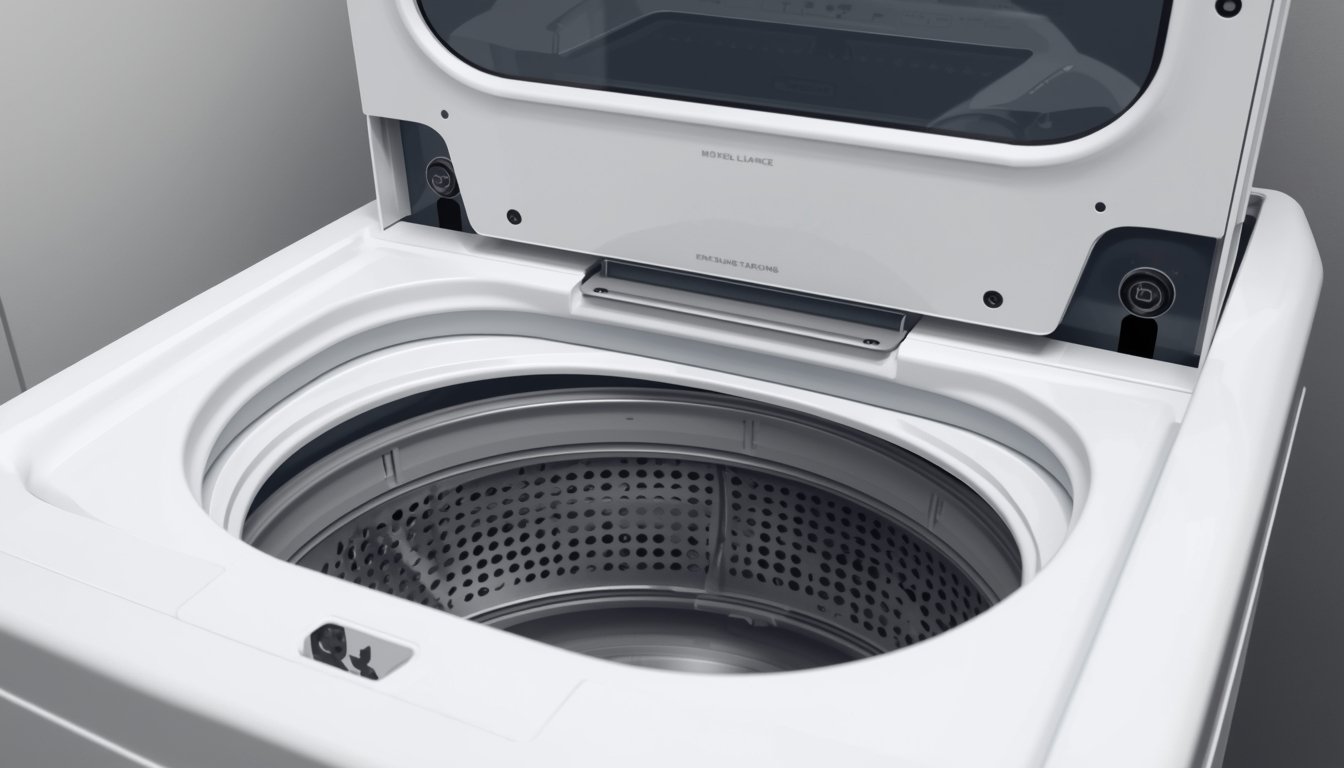
The washer lid switch is a small but essential safety component that tells the washer when the lid is closed. When it fails, the machine may refuse to start, stop in the middle of a cycle, skip spin, or act as though the lid is still open even when everything looks normal from the outside.
On many top-load washers, the lid switch is one of the first parts worth checking because it affects several basic functions at once. Understanding how it works makes diagnosis faster and helps you avoid replacing bigger parts before confirming whether the problem is simply the switch, the strike, or the wiring in that area.
Troubleshooting Guides
- Washer Won’t Start Lid Switch Problem
- Washer Stops Mid Cycle Suddenly
- Washer Won’t Spin Lid Switch Issue
- Washer Lid Switch Not Clicking
- Washer Lid Must Be Slammed to Work
- Washer Fills But Will Not Agitate Lid Switch Issue
- Washer Runs Only When Lid Is Held Down
- Washer Lid Switch Bypass Symptoms
- How to Test Washer Lid Switch
- Washer Lid Switch Replacement Guide
- Washer Lid Switch Location Guide
- Whirlpool Washer Lid Switch Compatibility Guide
- Kenmore Washer Lid Switch Compatibility Guide
- GE Washer Lid Switch Compatibility Guide
What a Washer Lid Switch Does
A washer lid switch is a safety device that confirms whether the lid is shut. On many top-load washers, the control system will only allow certain functions to start when this switch changes state from open to closed. That prevents the machine from spinning with the lid open and helps manage how the cycle progresses from one stage to the next.
Even though the part is small, it has a large effect on washer behaviour. If the switch does not close properly, the machine may look dead, stop unexpectedly, or refuse to spin. Because the switch interacts with the lid strike, mounting bracket, and harness, the full lid switch system is more than just one little button under the top panel.
That is why lid switch symptoms can seem larger than the part itself. A washer that will not start can look like it has a timer, motor, or control problem, but the real issue may simply be that the machine never receives confirmation that the lid is safely closed.
Common Symptoms of Failure
The most common lid switch symptoms are simple: the washer will not start, it stops in the middle of a cycle, or it will not spin. You may also notice that the familiar clicking sound is missing when you close the lid, or that the machine only works if you press down on the lid by hand.
Some failures are constant and obvious. Others are intermittent, which makes them more frustrating. A weak switch can work one day and fail the next, or only lose contact when the washer vibrates. That is why symptoms such as mid-cycle stopping or needing to slam the lid can still point strongly toward the switch.
It is also important to watch for related clues. A broken lid strike, loose switch mount, cracked housing, or damaged connector can create the same symptoms as a fully failed switch. Looking at the entire switch area rather than only the switch body makes diagnosis more accurate.
Why the Part Fails
Most washer lid switches fail through normal mechanical wear. The lid is opened and closed repeatedly, and that constant motion gradually wears the actuator, weakens the spring action, or stresses the internal electrical contacts. Over time, the switch may still move but no longer send a reliable signal.
Physical damage is also common. The lid strike can crack, the mounting screws can loosen, and the plastic around the top panel can shift. In these cases the switch itself may be partly functional, but the lid no longer presses it correctly. Vibration from regular washer use can make small alignment problems worse over time.
Electrical failure is the third main cause. Wires can fatigue, connectors can loosen, and moisture or age can affect contact quality. That is why a continuity test matters. It tells you whether the switch is truly opening and closing the circuit instead of relying only on appearance or sound.
How to Test the Part
Testing a washer lid switch usually starts with observation. Close the lid slowly and listen for a click. Check whether the lid strike looks damaged and whether the switch area seems loose or out of line. These quick checks often reveal obvious issues before tools are even needed.
The next step is electrical testing with the washer unplugged. Once you access the switch and disconnect it safely, a multimeter continuity test can show whether the switch changes state when the actuator is pressed. If the reading does not change properly, the switch is faulty or unreliable enough to justify replacement.
It also helps to test the switch while thinking about the full symptom. A washer that fills but will not move, or one that spins only if the lid is pressed down, may still need a careful inspection of the strike and switch mount, not just the switch terminals. Good testing combines electrical confirmation with a close physical inspection.
Replacement Overview
Replacing a washer lid switch is usually manageable with basic tools, but the exact access method depends on the washer design. On many machines, the top panel or cabinet must be opened so the switch mount, wiring harness, and lid strike path can be inspected directly.
Before installing a new switch, confirm that the replacement matches the original part layout. Connector shape, bracket design, and actuator position all matter. A switch that looks similar may not align correctly once fitted, especially across different brands and generations of washer design.
When the new switch is installed, check the lid strike and mounting alignment before closing the machine. A fresh switch can still behave badly if the strike is damaged or the panel is not sitting correctly. Taking a few extra minutes during installation usually prevents repeat failures and helps the washer return to normal operation right away.